
Acne + Acne Scars
Eradicate breakouts and scars for clearer skin
Acne and its lasting effects can impact confidence at any age, but modern aesthetic medicine offers effective solutions for both active breakouts and residual scarring. At Revery Medical Aesthetics, we understand that acne and acne scar treatment requires a multifaceted approach tailored to your unique skin type and concerns.
For active acne management, we offer professional-grade chemical peels and other technologies that deeply exfoliate pores, removing dead skin cells and reducing bacterial buildup. Our customized facial treatments incorporate specialized extraction techniques and anti-inflammatory therapies to address current breakouts while preventing future ones. Advanced topical treatments and professional skincare regimens help normalize oil production and cellular turnover for long-term clarity.
Acne scarring presents a different challenge, requiring treatments that stimulate collagen production and resurface damaged skin. Microneedling creates controlled micro-injuries that trigger your skin's natural healing response, gradually improving texture and reducing scar depth. Chemical peels of varying strengths can smooth surface irregularities and promote cellular renewal. For deeper scarring, laser therapies precisely target damaged tissue while stimulating new, healthy collagen formation.
Our approach begins with a comprehensive skin assessment to determine the most effective combination of treatments for your specific needs. Whether addressing active acne, preventing future breakouts, or minimizing existing scarring, we create personalized treatment plans that restore your skin's health and your confidence. Schedule a consultation to discover how we can help you achieve clearer, smoother skin.
Understanding Acne
Acne is one of the most common skin problems in the world. About 85% of people between 12 and 24 years of age get acne. But acne doesn't just happen to teenagers. Many adults get it too, especially women when their hormones change.
Acne might seem like just a simple skin problem, but it's actually quite complex. It happens when hair follicles (tiny holes in your skin where hair grows) and their oil glands get clogged and inflamed.
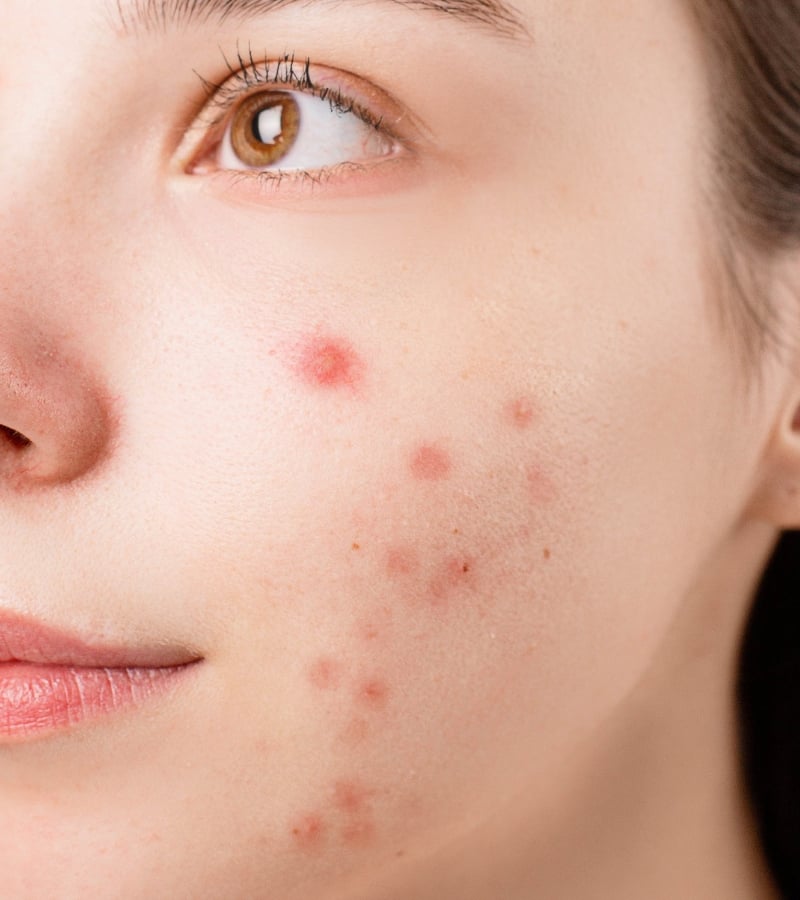
How Acne Develops
Acne happens through several steps that always occur in the same order. It mainly shows up on your face, chest, back, and shoulders because these areas have lots of oil glands.
- First, your skin starts making too much oil. This usually happens because of hormone changes, especially a hormone called testosterone. These hormones tell your oil glands to work overtime, creating the perfect conditions for bacteria to grow and cause inflammation.
- At the same time, dead skin cells start sticking together instead of falling off naturally like they should. Think of it like leaves clogging a drain. The dead skin cells form a plug that blocks the opening of your hair follicle. This creates a tiny blocked pore that you can't even see yet. As more oil gets trapped behind this blockage, the follicle swells up. This creates the perfect environment for acne bacteria to multiply quickly. These bacteria normally live on healthy skin without causing problems, but they love oily, blocked spaces.
- The bacteria eat the trapped oil and turn it into substances that irritate your skin. Your body's immune system notices this and sends white blood cells to fight the bacteria. White blood cells release chemicals that cause redness, swelling, and pain. This is how a simple blocked pore turns into the different types of acne pimples we can see.

Non-Inflammatory Acne: The Mild Types
Blackheads and whiteheads are the most common types of pimples, and considered to be the mildest forms of acne. They happen when pores get clogged but don't get too inflamed.
Blackheads form when the opening of the follicle stays open. Air gets in and turns the trapped material dark - that's why they look black. Many people think blackheads are dirt, but they're actually made of oil and dead skin cells that have been exposed to air.
Whiteheads happen when the follicle opening gets completely blocked. The trapped oil stays under the surface, creating small, skin-colored bumps.
These types of acne are like the starting point for more serious breakouts. That's why it's important to treat them early. They usually respond well to treatments with salicylic acid or retinoids, which help keep pores clear.
Inflammatory Acne: When Your Immune System Gets Involved
Papules are small, red, raised bumps that hurt when you touch them. They happen when blackheads or whiteheads become inflamed. You can see that your body is fighting bacteria because the area gets red and swollen.
Pustules are like papules but with visible white or yellow centers filled with pus. The pus is made up of dead bacteria, white blood cells, and other cellular waste. Even though it's tempting, you shouldn't squeeze pustules because this can make the inflammation worse and increase your chances of scarring.
Nodules are a more severe type of acne. They're large, hard lumps that form deep under the skin. These develop when inflammation spreads beyond the hair follicle into the surrounding skin tissue. Nodules can be very painful and may last for weeks or months. They rarely come to a head on their own and usually need professional treatment to prevent permanent scarring.

Severe Acne: The Most Difficult Types
Cystic acne involves deep, fluid-filled lesions that feel soft when you press on them. These painful cysts form when severe inflammation creates large pockets filled with pus and debris. This type of acne is the most likely to cause permanent scarring and often needs stronger medications to resolve.
Acne conglobata is the most severe type of acne. It features connected nodules and cysts that create tunnel-like formations under the skin. This rare type mainly affects males and can last for many years without proper treatment, causing serious physical and emotional problems.
What Causes Acne
Besides hormones, several factors can contribute to acne development. Your genes play a big role. If your parents had severe acne, you're more likely to have it too. Environmental factors like certain makeup products, medications, and foods might make existing acne worse. Stress doesn't directly cause acne, but it can make existing breakouts worse by affecting your hormones.
Today's acne treatments recognize that acne is complex, so doctors often use multiple approaches at once. Topical retinoids help normalize how skin cells turn over, antibiotics fight bacterial overgrowth, and hormonal therapies control oil production. For severe cases, strong medications like isotretinoin can address all the factors that cause acne.
Understanding how complex acne really is helps you manage it better. At Revery Medical Aesthetics, we know that effective acne treatment needs to be personalized for each person. Schedule a consultation to explore how proper acne management can restore your skin's health and your confidence.
Schedule Your Complimentary Consultation
Achieve a refreshed and refined version of yourself—authentic, confident, and effortlessly transformed.
CONTACT
HOURS
Monday to Friday
10:00am - 6:00pm
Saturday
9:00am - 4:00pm
Welcome to Revery Medical Aesthetics, a physician-led practice serving LaSalle and Windsor Ontario. Our services are uniquely guided by an experienced physician, a rarity in a field frequently dominated by non-physician practitioners.
© 2026 Revery Medical Aesthetics
PRIVACY POLICY | REFUND/SHIPPING POLICY
Marketing by ThinkBasis Inc.
CONTACT
HOURS
Monday to Friday
10:00am - 6:00pm
Saturday
9:00am - 5:00pm
Welcome to Revery Medical Aesthetics, a physician-led practice serving LaSalle and Windsor Ontario. Our services are uniquely guided by an experienced physician, a rarity in a field frequently dominated by non-physician practitioners.
Fax: +1 226 778 2046