
Nature's Miniature Factory: The Incredible Structure of Hair Follicles
Deep beneath your skin's surface, millions of tiny biological factories work around the clock to produce one of your body's most remarkable creations: hair. These sophisticated structures, called hair follicles, represent some of the most complex and fascinating organs in human biology. Each follicle operates like a manufacturing plant, complete with its own blood supply, nerve connections, and stem cell reservoir.
The Architecture of a Hair Follicle
Imagine a narrow tube extending from your skin's surface deep into the underlying tissue. This tube, your hair follicle, is far more complex than it appears. The follicle consists of multiple layers, each serving specific functions in the hair-making process.
The external layer is called the outer root sheath. It provides structural support and protection. Moving inward, you find the inner root sheath, which guides and shapes the growing hair as it moves upward. At the very centre lies the hair shaft itself: the visible part of your hair that emerges from your skin.
The most fascinating part sits at the bottom of the follicle: the hair bulb. This bulbous structure houses the dermal papilla, a small cluster of specialized cells that acts as the follicle's control center. Think of it as the foreman of your hair factory, determining when to start production, how fast to work, and what type of hair to create.
The dermal papilla contains specialized cells that communicate with the rest of the follicle through chemical signals. These cells respond to hormones, nutrients, and other factors that influence hair growth. When conditions are right, the dermal papilla sends "go" signals that activate hair production throughout the follicle.
The Stem Cell Powerhouse
Your hair follicles contain highly active stem cells. These remarkable cells live in a special area called the bulge, located about halfway down the follicle. Unlike many other stem cells that remain quiet until needed, hair follicle stem cells constantly cycle between periods of activity and rest.
When activated, these stem cells divide rapidly and transform into different types of cells needed for hair production. Some become the cells that form the hair shaft, while others create the supporting structures around it. This stem cell activity is so robust that scientists study hair follicles to understand how stem cells work throughout the body.
The stem cell reservoir in each follicle is essentially renewable, capable of producing hair throughout your entire lifetime. This explains why you can cut your hair repeatedly, and it keeps growing back. The follicle maintains its production capacity because these stem cells continuously replenish themselves.
These stem cells also have the remarkable ability to repair damaged follicles. When injury occurs, dormant stem cells can activate and rebuild damaged tissue, restoring the follicle's hair-producing capabilities.
The Blood Supply Network
Each hair follicle has its own dedicated blood supply system. Tiny blood vessels called capillaries wrap around the follicle, delivering oxygen and nutrients essential for hair production. This blood supply is particularly rich around the dermal papilla, reflecting the high energy demands of active hair growth.
The blood vessels also carry hormones and other chemical signals influencing hair growth patterns. Changes in blood flow to the follicles can affect hair production, which explains why scalp massage and certain medications that improve circulation can influence hair health.
During active growth periods, blood flow to the follicle increases dramatically to support the rapid cell division and protein synthesis required for hair formation. This vascular network is so important that any disruption can immediately affect hair production.
The follicle's blood supply also removes waste products generated during the intense metabolic activity of hair production. Without adequate circulation, toxic byproducts could accumulate and damage the follicle's delicate cellular machinery.
Sebaceous Glands: The Hair's Support System
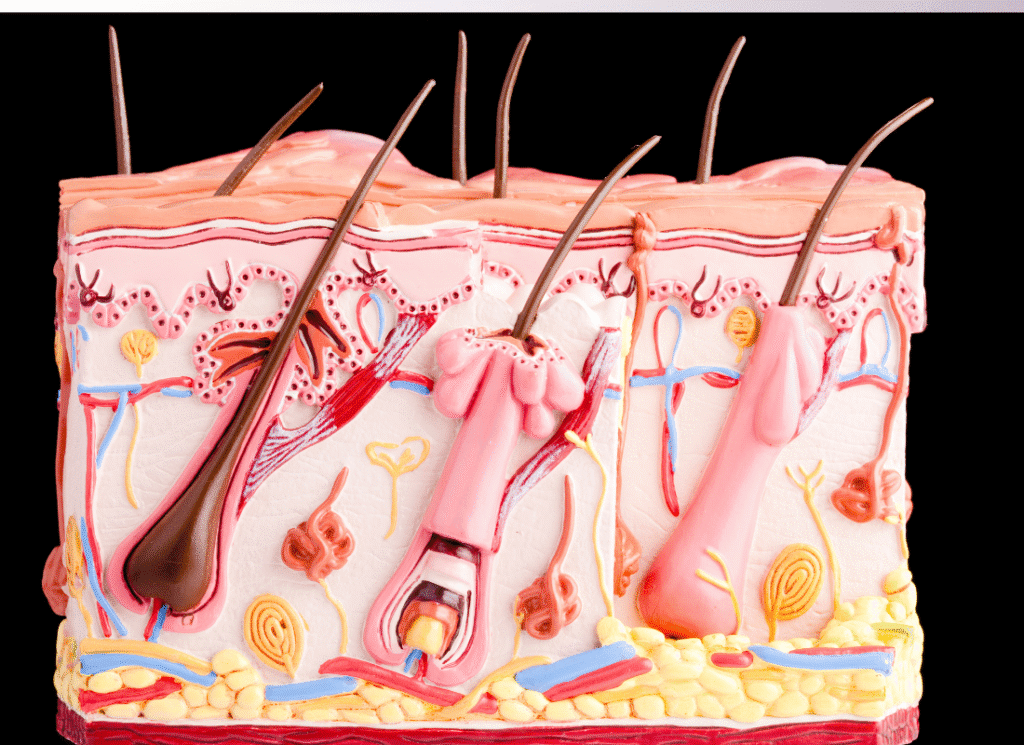
Attached to each hair follicle is a small oil-producing gland called a sebaceous gland. These glands manufacture sebum, a complex mixture of oils that serves multiple important functions for both hair and skin health.
Sebum coats the hair shaft as it emerges from the follicle, providing natural conditioning and protection. This oil helps maintain hair flexibility, prevents excessive moisture loss, and creates a barrier against environmental damage. The sebaceous gland essentially provides your hair with its own built-in conditioning treatment.
The size and activity of sebaceous glands vary depending on location and hormonal influences. Scalp glands tend to be larger and more active than those on other parts of the body, which is why scalp hair often appears more oily than body hair.
Sebaceous glands also have antimicrobial properties, helping protect the follicle from bacterial and fungal infections. The slightly acidic nature of sebum creates an environment that discourages harmful microorganisms from colonizing the hair and skin.
Nerve Connections and Sensory Functions
Hair follicles are richly supplied with nerve endings that serve important sensory functions. These nerves can detect the slightest movement of the hair shaft, making your hair an extension of your body's sensory system.
When something touches your hair, even lightly, the movement is transmitted down the shaft to the follicle, where nerve endings detect the motion and send signals to your brain. This system is so sensitive that you can feel a single hair being touched without any contact with your skin.
The nerve supply also includes sympathetic nerves that respond to emotional states. This explains why extreme stress or fear can literally make your hair "stand on end" – the nerve signals cause tiny muscles attached to each follicle to contract, pulling the hair upright.
These tiny muscles, called arrector pili, serve important functions beyond emotional responses. They also help regulate body temperature by trapping air close to the skin when contracted, and they assist in expressing sebum from the sebaceous glands.
Hormonal Influences on Follicle Function
Hair follicles are exquisitely sensitive to hormonal changes throughout your life. Different hormones can dramatically alter follicle behavior, changing everything from growth rate to hair thickness and texture.
Androgens, including testosterone and its derivatives, have particularly strong effects on hair follicles. These hormones can stimulate growth in some areas while inhibiting it in others, explaining the different patterns of hair growth between men and women and the changes that occur during puberty.
Growth hormone, thyroid hormones, and insulin-like growth factors also influence follicle activity. The follicles essentially act as biological sensors, responding to your body's overall hormonal environment and adjusting hair production accordingly.
Estrogen and progesterone, particularly important in women, can extend growth phases and improve hair thickness. This explains why many women notice changes in their hair during pregnancy, menopause, or when using hormonal contraceptives.
The Follicle's Remarkable Regenerative Abilities
Perhaps most amazingly, hair follicles have extraordinary regenerative capabilities. Unlike many other organs that lose function with age or injury, healthy hair follicles can continue producing hair throughout your entire lifetime.
Even when damaged, follicles often have the ability to repair themselves and resume normal function. This regenerative capacity comes from the robust stem cell population and the follicle's ability to rebuild its structure during each growth cycle.
Scientists are intensively studying these regenerative properties, hoping to understand how other tissues might be encouraged to repair themselves. The hair follicle serves as a natural laboratory in the research for understanding tissue regeneration and stem cell biology.
The follicle's ability to reconstruct itself during each growth cycle is unique among human organs. This process involves the coordinated breakdown and rebuilding of multiple tissue types, all orchestrated by precise molecular signals.
Schedule Your Complimentary Consultation
Achieve a refreshed and refined version of yourself—authentic, confident, and effortlessly transformed.
CONTACT
HOURS
Monday to Friday
10:00am - 6:00pm
Saturday
9:00am - 4:00pm
Welcome to Revery Medical Aesthetics, a physician-led practice serving LaSalle and Windsor Ontario. Our services are uniquely guided by an experienced physician, a rarity in a field frequently dominated by non-physician practitioners.
© 2026 Revery Medical Aesthetics
PRIVACY POLICY | REFUND/SHIPPING POLICY
Marketing by ThinkBasis Inc.
CONTACT
HOURS
Monday to Friday
10:00am - 6:00pm
Saturday
9:00am - 5:00pm
Welcome to Revery Medical Aesthetics, a physician-led practice serving LaSalle and Windsor Ontario. Our services are uniquely guided by an experienced physician, a rarity in a field frequently dominated by non-physician practitioners.
Fax: +1 226 778 2046